Old Dock and Musconetcong River in Autumn

We are really getting a nice variety of colors in our deciduous trees in Northern New Jersey now.  As much as I’d like to be lazy I know that these opportunities are fleeting, and that an overcast day can really make for beautiful nature captures.

New Jersey Fall Landscape Photo

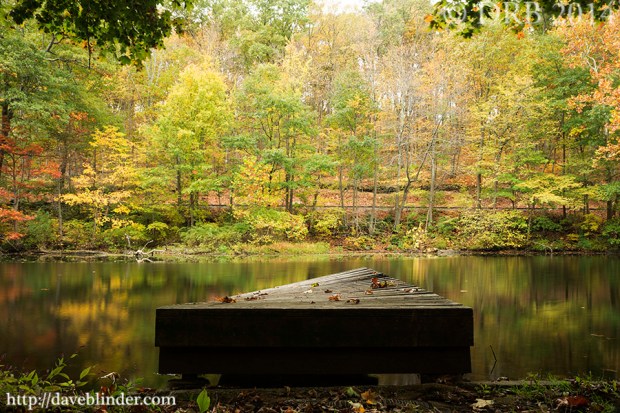
An old dock twists along the Musconetcong River in New Jersey with a backdrop of Autumn Foliage. Taken with the Tamron SP 24-70mm VC lens and the Canon EOS 6D full frame camera.

The above photo was taken today at the Saxton Falls section of Stephens State Park.  I did try several compositions with this twisted dock including vertical images, but this one “just worked” for me.  Putting the frame of the dock in the center bottom of the image makes a nice leading line into the reflections of the Musconetcong River.

Photo taken with Tamron SP 24-70mm VC lens, a circular polarizing filter, and the tripod-mounted Canon EOS 6D full frame DSLR.  Exposure settings: 2s F/18 ISO 11, 33mm.

New Jersey Panoramic Photography – The Great Swamp National Wildlife Refuge

I will precurse this post with the disclosure that I have taken very few panoramas in the past which I consider successful.  However, I have invested in an Acratech leveling base that now sits between my ballhead and tripod, this will offset shooting from sloped terrain.

NJ Fine Art Landscape Photo

5 image panorama taken from the parking lot of the Great Swamp National Wildlife Refuge in New Jersey. Taken with the Tamron 14-150mm Di III Lens and the tripod mounted Olympus PEN E-PL3 micro four thirds camera.

Exposure settings for above photo: 1/10th F/10 ISO 200.  Manual focus and manual exposure utilized as necessitated.  Taken with the Tamron Di III 14-150mm lens and the Olympus PEN E-PL3 m43 camera.

This five image panoramic photo succeeds where a single frames would perhaps fail in impact.  There is a great range of colors and manageable dynamic range in the trees but the overcast and featureless sky is best minimized by a very expansive view.  Understanding dynamic range, knowing how a camera clips shadows and highlights, and anticipating how the human eye will subsequently view the capture is essential to crafting quality photographs.  What’s the shortcut to studying all of this?  STUDY ALL OF THIS 🙂

Autumn at Ken Lockwood Gorge; #1

What is one to do on a rainy, cool, and overcast day on New Jersey?  Take nature photographs of course 🙂

This was only my second visit to the Ken Lockwood Gorge Wildlife Management Area.  I wasn’t certain if it was a great place for landscape photos. With the element of running water in a nature area and also clouded skies, I figured it was worth a try… It was worth it.

New Jersey Landscape Photography

Brilliant yellow leaves line the banks of the South Branch of the Raritan River in New Jersey.

This was one of the broadest densities of yellow leaves that I laid my eyes on, and it also made a great vantage point for the s-curve of the river.

Photographed with the Tamron 14-150mm Di III lens, a circular polarizing filter, and the Olympus PEN E-PL3 micro four thirds camera.  Exposure settings were: 0.8s F/11 ISO 200

New Jersey Landscape Photography: View Through Barn

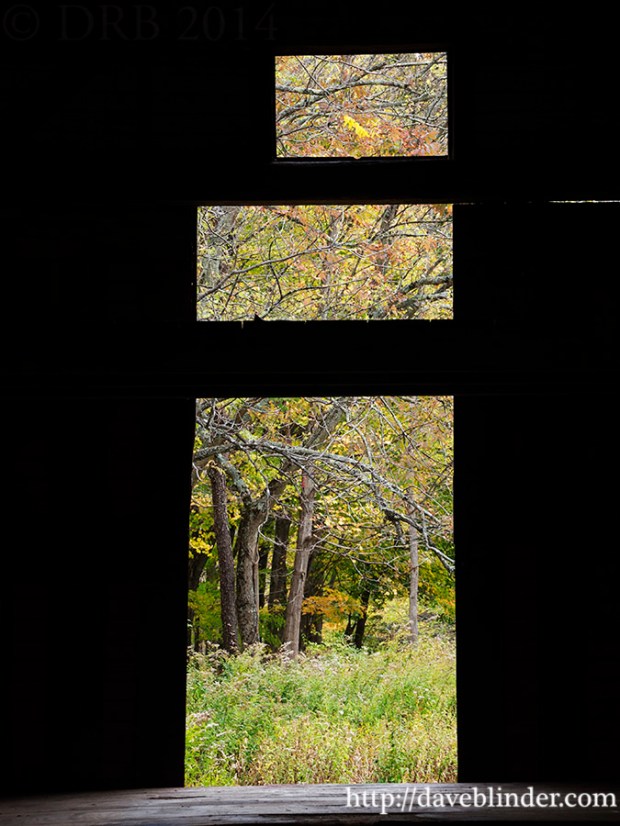
Here is one of my favorite photos I took today on a nature excursion.  The Delaware Water Gap National Recreation Area in NJ contains many historic buildings that are great for photography.  Entrance into the buildings is forbidden, but for this shot I set my tripod just outside of the barn so my lens could peer though.

New Jersey Landscape Photograph

A historic barn divides a view of the woodlands into three sections. Photo taken with the Tamron 14-150mm Di II lens and the Olympus PEN E-PL3 micro four thirds camera.

My favorite part of this photo is the faint splash of light hitting the floorboards in the foreground.

Equipment used: Tamron 14-150mm Di III Lens, polarizing filter, Olympus PEN E-PL3 micro four thirds camera, carbon fiber tripod.  Exposure settings: 1/6 F/11 ISO 200.

Fog on Lakeshore

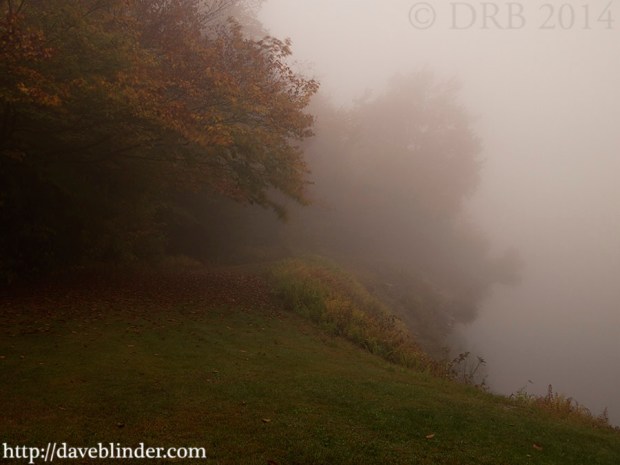
This landscape photograph was taken at 7:16 AM at Ricketts Glen State Park in Pennsylvania.  The composition is framed using several points of alignment to the rule of thirds.  An obscured background tree caused by the dense layer of fog adds the essential element of mystery to the photo.

Fine Art Nature Photography

A few minutes after sunrise, a blanket of fog sets the mood on Lake Jean at Ricketts Glen State Park in Pennsylvania. Photographed with the Tamron 14-150mm Di II and the Olympus PEN E-PL3 compact camera.

Equipment used: Tamron 14-150mm Di III Lens, circular polarizing filter, Olympus PEN E-PL3 micro four thirds camera, and Benro carbon fiber tripod.  Aperture Priority exposure mode resulted in camera settings of: 0.6s F/10 ISO 200.  17mm focal length, RAW image format, 2 second timer.

Fog on Lake Jean

Having woken up at 4AM to make a sunrise trek from New Jersey to Ricketts Glenn, I had tripod in hand and was ready to capture mirror-like images of the morning sun hitting the horizon over Lake Jean.  However, that wasn’t to be, the dense fog rendered visibility to about 20 feet.  Not a problem!  When interesting atmospheric and weather conditions occur you just roll with the punches!

PA Fine Art Photo

Long exposure landscape photo of a foggy morning at Ricketts Glen State Park in Pennsylvania.

The above photo was taken with the Tamron 18-270mm VC Lens and the Canon EOS M Compact Systems Camera with the shutter at 5seconds, an aperture of F/13, and ISO 100.  Taken in Aperture Priority Mode with -1/3 exposure compensation dialed in.  Carbon fiber tripod, Spot Metering, 2-second delay, Auto White Balance, RAW image format.

Beech Leaf and Cascades

This morning I had the pleasure of meeting up with Ed Heaton, a Tamron Image Master, renowned  for his landscape photography expertise and his equally talented son Zach to capture some views of Autumn in Pennsylvania.

Most of my photos today were with the Tamron 14-150mm Di III Lens and my Olympus PEN E-PL3 Micro Four Thirds Camera.  A small and lightweight combo that can capture a great diversity of scenery.  Here is one of my favorites:

Fine Art Waterfall Photograph

Autumn in Pennsylvania captured with the Tamron 14-150mm Di II Lens and the Olympus PEN E-PL3 Micro Four Thirds Camera.

Camera settings: 14mm (28mm equivalent) @ 1/2s F/9 ISO 200.  Aperture Priority Mode -2/3 EC, Auto White Balance, RAW file format, Spot Metering, 2-second delay.  Camera mounted on Benro carbon fiber tripod.

The best tripod head for waterfall photography is….

…not a fluid video head.  I found that out the hard way.  They work great for static HORIZONTAL shots, but they lack the slot on ballheads that rotates the camera to a vertical orientation.  My Manfrotto 055x ProB does provide a workaround, because the extending center column can tilt the mounted camera by 90 degrees.  Next time I’m going to just bring the correct ballhead with me.

NJ waterfalls picture

Waterfall photo taken in Morris County New Jersey. The equipment utilized was the Tamron 14-150mm Di II all-in-one lens and the Olympus PEN E-PL3 Micro Four Thirds Camera.

Above photo taken with the Tamron 14-150mm Di III Lens, the Olympus PEN E-PL3 M4/3 Camera, and a Manfrotto tripod.  A 52mm circular polarized was mounted onto the lens to lower reflections and increase exposure time.  Camera settings: 14mm (28mm full frame equivalent), 0.6s F/10 ISO 200 in Manual Exposure Mode.  Auto White Balance, Stabilization off, 2-second Delay, and Single Point focus near the Maple leaf.

Optimizing Photo Contrast for the Web: Creek and Fallen Leaves

In my fairly early years of photography, I got caught with the ETTR bug.  Is that a fatal virus?  Nope.  ETTR is an acronym which stands for Expose To The Right.  This ideology is based on the idea that a bright exposure with a histogram pushed as for towards the right (brightness side of histo) is the path to maximum image quality in long run. When exposing to the right, a user wants to make sure the highlights are not clipped or blown out of gamut.  Lost highlights can’t be recovered much, there are no x’s and o’s on your memory card for your camera or computer to look at.  On the flip side, having a slight overexposure of your shadow areas DOES bring in extra information in the pixels.

RAW PhotoShop workflow

A side-by-side comparison of my post-processed file versus the SOOC shot.

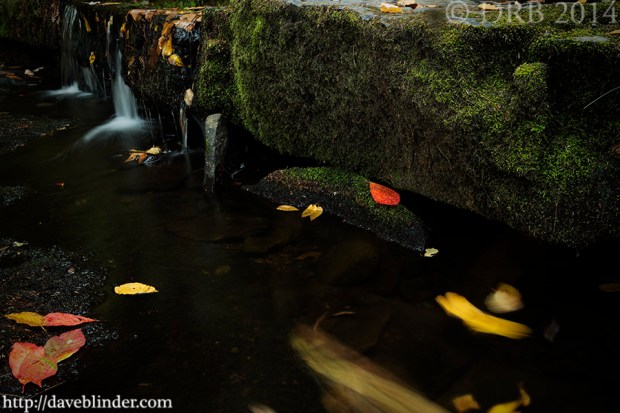
The above illustration hopefully shows how I “season to taste” on a landscape photo that I took yesterday.  Setting the black level and white level can be a matter of personal preference, there are no hard-set rules.  I like my pictures to tell a believable tale by retaining the integrity of the scene but I also want plenty of contrast so that my upload or print will “pop”.  For this particular photo I used the Curves tool to bring the dark areas from a medium tonality to a darker tonality.  This provides greater separation between the highlights, midtones, and shadows.  I’ve also added a slight vignette which helped to “burn in” some bright corners from the original photo.
NJ Landscape Photographer

Optimized image, originally exposed to the right. Taken with my Tamron 18-270mm VC Lens and my Canon EOS M 18.0 MP Compact Systems Camera. Manfrotto tripod used for stability and a 3-stop Neutral Density filter was used to lengthen exposure time.

Finalized photo is above.  A landscape nature frame taken in Pennsylvania.  The equipment used includes a Tamron 18-270mm VC Lens, a Canon EOS M Camera, a 3-stop Neutral Density Filter, and a Manfrotto Tripod.  Metadata: 2.5s F/13 ISO 100, 27mm in Manual Mode.

New Jersey Fine Art Nature Photo: Dusk at the Jersey Shore

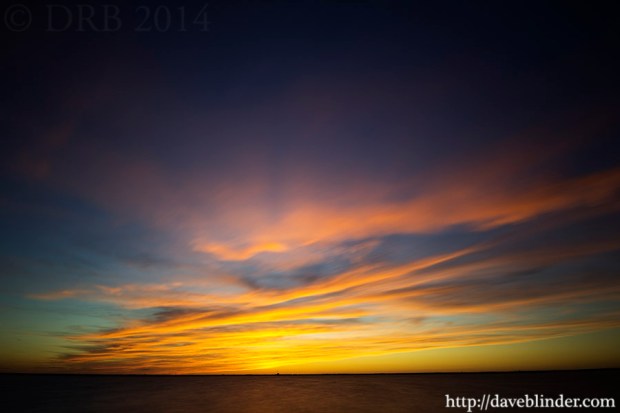
This is a recent DSLR image made in Ocean County, New Jersey.  I had seen examples of long exposure photography that exhibited substantial cloud blurring but I hadn’t pulled many off before this.  I still would like to increase the length of this type of shot to minimize shape definition but that will require use of Bulb Mode on the camera and even less light hitting the sensor.

NJ Fine Art Photo

A long exposure DSLR photo facing westward a couple of minutes after sunset. Some low cloud formations briefly reflected vibrant pink and orange hues. Nature photograph taken in New Jersey using the Tamron SP 10-24mm Di II Lens + Canon EOS 50D.

Above photo was taken with the tripod mounted Canon EOS 50D camera and the Tamron SP 10-24mm Di II LD lens.  A Hoya 77mm HDx400 HMC filter is screwed onto my lens thread.  This 9-stop Neutral Density filter greatly lowers the amount of light that reaches the camera’s sensor.  Exposure time is 30 seconds at F/10 ISO 100.  Mirror Lock-Up and Camera Timer were also set on the camera to reduce loss of sharpness from vibration of the camera’s mirror or from my hand pressing the shutter button.