New Jersey Nature Photography: Icicles and Droplet

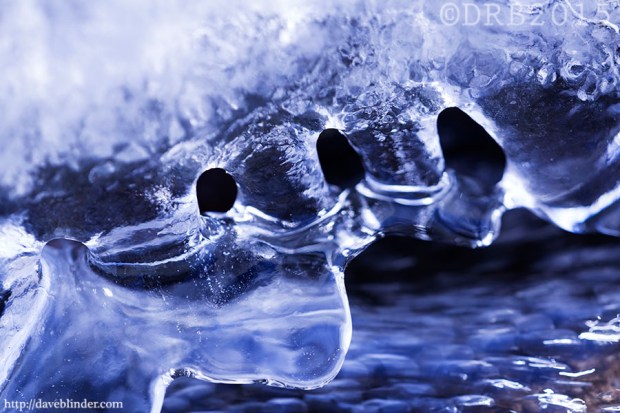
I stumbled upon the challenge of trying to make a sharp capture of water droplets falling off an icicle today.  The timing required a little observation and a lot of luck.  To freeze the action, I had to increase the light sensitivity of my Canon Rebel by selecting ISO 6400.  Naturally, this is going to introduce a great deal of chromatic and luminance noise.  I did some selective post-processing via manual selections and multiple layers to optimize my file for print and web.  Heavy noise reduction was only run on the background layer and my second pass of sharpening was only applied to the foreground.

Detail crop showing selective post-processing:

layered image editing

A melting droplet is suspended in sharply air, but a lot of random grain has been generated. This cropped-in view only has my #selective #sharpening and #noise reduction applied on the left side.

My finalized jpeg for web usage:

Winter icicle photography
Time briefly stands still… for 1/3200 of a second in this #photo of a melting icicle. Photo taken at ISO 6400 on a #Canon T5 with the #Tamron 16-300mm VC lens.

Florida Nature Photography: American Alligator

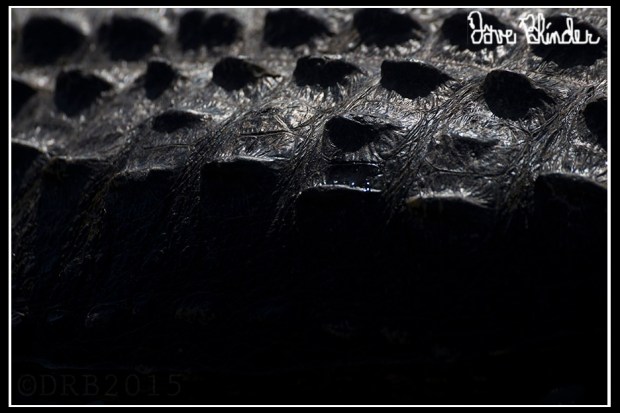
It is always a good idea to “work the scene” when out performing nature photography.  Our instincts may lead us to shoot a subject from a specific angle that has worked well for us in the past, or maybe even to mimic what we have seen in a magazine.  However, there are nearly infinite ways to image an animal, plant, or landscape when we factor in using different focal lengths, varied camera angles, and also begin to think abstractly.  One alternative type of shot is  to fill the frame with nothing but the texture of a live animal’s skin, fur, or feathers.  In this case we are looking at the “business side” of an American Alligator’s body.  Yes, the animal is both free and alive.

Alligator photo

An intimate view of the ridges atop an Alligator’s body. All other contextual clues are eliminated from the frame. #Photo taken with the #Tamron SP 70-300mm VC lens and the #Canon 6D.

A Florida butterfly and some words in photo image quality

A friend on Facebook asked for details of the shot so I wrote out a bit of my technique and criteria for detail photos of butterflies.  Note that for an abstract capture, these ideas can go right out the window!

Florida butterfly photograph

#Florida nature #photo of a Zebra Heliconian butterfly. Taken with the tripod-mounted #Tamron SP 150-600mm VC lens and the Canon EOS 60D DSLR.

Question I was posed:

“Was this shot using a tripod?? so clear.. somehow i need to work on that. mine are almost never this sharp..”

My response(s), hopefully helpful:

Dave BlinderYep, 1/200th F/8 ISO 400, Vibration Compensation (IS), carbon fiber tripod. Sharp butterfly shots not possible near 600mm without tripod. When I shoot butterflies with my 90mm macro lens I do 75% handheld. Average time I spend photographing an individual butterfly is anywhere between 5mins and 1.5hrs. I don’t leave until I verify I have the eye perfectly in focus on the LCD.”

If the butterfly’s eye is not in sharp focus I do not post the photo online.

Same technique for dragonflies. Nearly identical for birds, but if the bird is distant and I don’t think I can fill 20% or more of the frame I skip the shot. My definition of a sharp eye is viewing the texture on the surface of the subject’s eye nearest the camera.

Florida Nature Photography (and Photoshop Action Writing)

I am mostly done with my first round of edits from the recent photography trip to Florida… approx 3000 raw images.  I’m interested to see how many photos I will process into JPEGs for possible web and print usage, my estimation might be 15%.

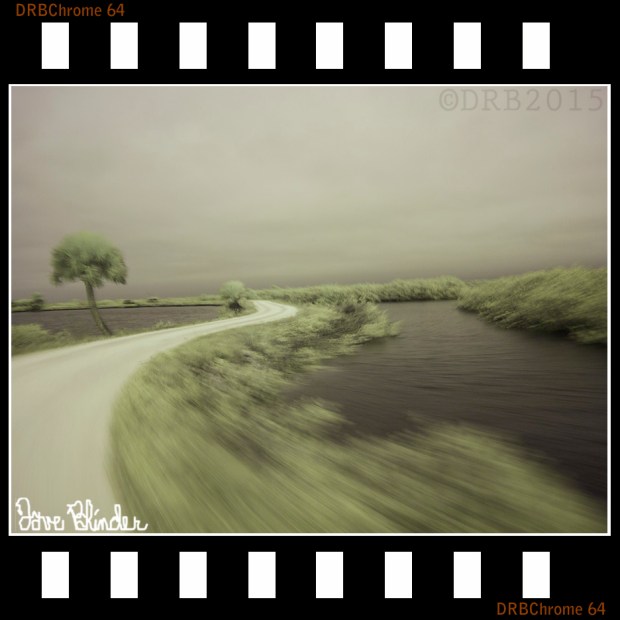
Anyhow, below is one of my shots from the trip.  The photo is clearly a bit abstract because it was not only taken with my infrared converted Olympus PEN, but I also dragged the shutter while shooting from a moving car.  This intentionally introduced some motion blur, to add further dynamics to the scene.

Below I have uploaded not only my web version of the jpeg (for direct uploading to Flickr and Facebook), but also my Instagram version of the jpeg.  I have written a short Photoshop Action for the framing of the specific hosts.  Instagram restricts uploads to a square aspect ratio, so I chose to record my own action to drop my micro four thirds photos directly into a square faux film frame.  No cropping or stretching of my images needed, and it is possible that the film frame adds an extra bit of flare to the IG uploads.  For any questions of Photoshop Actions or requests for your own personalized Action please contact me.

Both photos taken with the Tamron 14-150mm Di III lens and the Olympus PEN EPL2.

Florida travel photo

An infrared photo from Merritt Island National Wildlife Refuge in #Florida. I set a manual exposure and dragged the shutter to introduce a bit of motion blur. Photo taken with #Tamron 14-150mm Di III lens and #Olympus PEN EPL2

Instragram Square Photo

A #Photoshop Action was recorded to #automate this process, now all I have to do is click one button to repeat the process and prepare my uploads for #Instagram

Florida Nature Travel Photography: Roseate Spoonbill

My recent trip to Merritt Island National Wildlife Refuge in Florida yielded my first views of the radiant Roseate Spoonbill.  Spoonbills are fairly large wading birds (similar in habit to Herons) with varying degrees of pink on their plumage.  Their easily recognizable color and shape make them a favorite for bird photography.  For this creative flight blur capture I set my exposure in manual mode to have complete control over the outcome of the photo.

Exposure settings: 1/25s F/16 ISO 100, 483mm handheld.

BIF photography

A creative motion capture of Roseate Spoonbill at Merritt Island National Wildlife Refuge in Florida. Bird #photo taken with the #Tamron SP 150-600mm VC lens and the #Canon EOS 60D DSLR.

Florida Nature Travel Photography: Brown Water Snake

Many nature photographers head to Florida to photograph birds because they are abundant, cooperative, and colorful.  Some head down to shoot landscape images of the great wilderness areas.  Probably more than a few go just to eat Key Lime Pine.  Others go for the snakes.

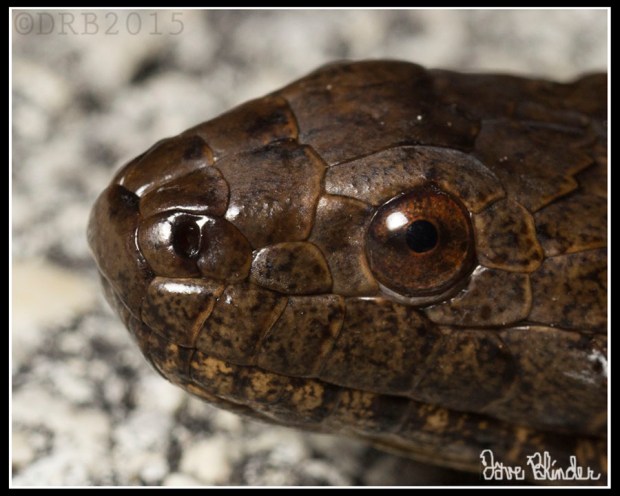
Below is one of the Snakes I saw on this trip, a Brown Water Snake.  This stocky serpent has a head shape that looks a bit look a dangerous viper, but there is no venom to be found in this species.

FLA Wildlife Pic

A Brown Water Snake absorbs some of the remaining heat from the road, shortly after sunset. #Photo taken handheld with the #Tamron SP 90mm VC macro lens, the #Canon T5 DSLR, and a 270EX II Speedlite with homemade flash diffuser.

FLA Water Snake Crop

A magnified view of the eye and face of a Brown Water #Snake in #Florida. Photo taken with the #Tamron SP 90mm VC macro lens.

Florida Nature Travel Photography: Scrub Jay

Last night I arrived home from a week of Florida nature photography. 3000+ Raw files to weed through, I expect to share less than 20% of them as always due to quality control and redundancy.

Anyway, here’s a nice shot of the endemic Florida Scrub Jay, first time I’ve ever seen one.  They can be approachable, so the quality of photo depends mainly on the angle of sunlight and subject isolation.  Below is my finalized web jpeg of the capture and also a detail crop.  Photo was taken with the Tamron SP 150-600mm VC lens, the Canon EOS 60D DSLR, and my Benro carbon fiber tripod.

Florida Bird Photo

One of the most famous #songbird residents of Florida, many people go to parks just to observe these vivid and active Jays. #Photo taken with the #Tamron SP 150-600mm VC lens and the #Canon EOS 60D

Exposure settings: 1/250 F/8 ISO 400, 500mm

bird photo detail

A tighter view of my original frame, nice #feather and eye #detail from the #Tamron SP 150-600mm VC lens.

New Jersey Nature Photography: Ice Detail #2

I braved the cold front for a bit on New Years Day, and headed out with my Tamron SP 180mm macro lens and Canon 6D to see what I could see.  After I began shooting, I realized that my camera’s White Balance was set to Florescent due to some indoors video I had previously been shooting.  More often than not, I will use Auto White Balance for shooting stills (in Raw format).  While White Balance is easily changed during Raw processing, it affects the “mood” of my initial photos as I glance at the previews on my LCD.

In this case, I not only liked the cooling effect of the manual White Balance on my subject matter, I loved it.  Improper WB’s can often render photos as unrealistic, but there are certainly times and places for creative WB usage.

NJ Nature Photo

Ice Detail 2. New Jersey #Nature Photo taken handheld with the #Tamron SP 180mm F/3.5 macro lens and the Canon EOS 6D.

Exposure Settings: 1/160 F/4.5 ISO 200, 180mm

New Jersey Nature Photography: Woodland Stream

Here’s a photo I took yesterday with my IR-converted Olympus PEN E-PL2 and the Tamron 14-150mm Di III lens.  I like the composition of my shot, the foreground shrub nicely fills in some negative space, and the forest fills in the upper 3rd of the frame.  I also really like the backlighting strongly showing through the leaves.  I do feel that the highlights on the stream itself are a bit strong.  The highlights are clearly blown out in several areas, even after a small amount of highlight recovery from the Raw file.  Does the image work as a whole?  I will leave that up to the viewers.

NJ Nature Pic

#NewJersey #Nature #Photo taken in Rockaway Township using the tripod mounted Olympus PEN E-PL2 and the #Tamron 14-150mm Di III lens.

The shortcut to becoming a better photographer

“The shortcut to becoming a better photographer”

An opinion essay by Dave Blinder
Bird Photo

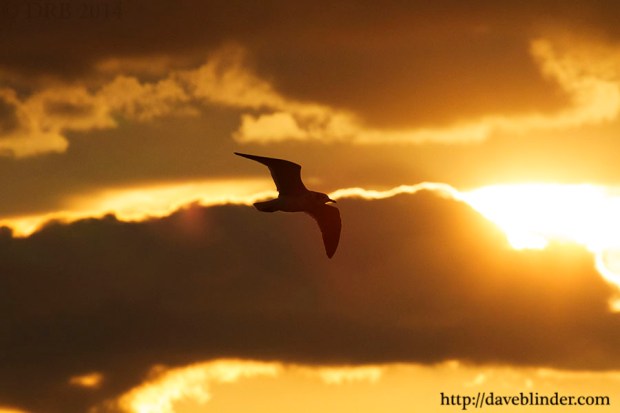
A gull is silhouetted by golden sunlight in late afternoon in this #nature #photograph

The shortcut to becoming a better photographer

—————————————————————

I’ve been asked many times by friends, acquaintances, and strangers what lens and camera they should purchase to take better photographs.  Often times I will recommend they purchase nothing at all, except for a few books or even pay to attend a photography seminar.  Unfortunately this is rarely the answer anyone cares to hear, and it could be interpreted as a facetious statement.

There certainly are times when aspiring photographers should upgrade their equipment when they can afford to do so. However, no equipment can compensate for photographing in harsh mid-day light or taking all photographs handheld with your camera at eye-level. The shortcut to becoming a better photographer is… realizing that there are no shortcuts. The shortcut is waking up at weekends at 4AM to arrive on-location before sunrise. The shortcut is having the discipline to always put your camera on a tripod and investigating all possible angles of view.

The shortcut is taking advantage of all photography learning sources available and attending every major seminar you can. Seek experienced constructive critiques and have the strength to let go of your weakest images. Take a few of your straight out of camera images, skip the digital darkroom, and put them right on the internet. Don’t shoot subjects in the shade and expect to boost the shadows. Study the qualities of natural and artificial light and learn how to capture and mold the light.

Purchase a rain cover for your camera and be willing and even enthusiastic to photograph in cold and wet weather. Figure out what all of your peers are taking photos of and then figure out what they are not taking photos of. Stop making excuses not to shoot, make excuses to shoot. The shortcut to becoming a better photographer is to avoid shortcuts, get started today.

– Dave Blinder, 12/2014

Words and image by Dave Blinder, Denville, New Jersey.  Feel free to circulate or share but please leave text and photo untouched.  Thank you.