Image Optimization: An Eastern Chipmunk

I will precurse the photos with a disclaimer that I find it difficult to walk by the enumerated Eastern Chipmunk without taking a picture EVERY SINGLE TIME.  That being said, below is a peak at my RAW conversion workflow for a new wildlife photo.
nature photography photoshop workflow

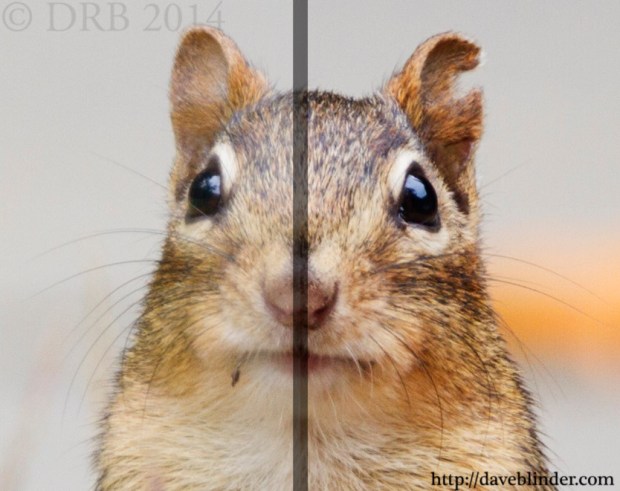
Left side is with my saved Camera RAW defaults applied. Right side is my output image with contrast and further sharpening and noise reduction applied for web/general print.

The above composite is a megacrop created only for the purpose of showing my 2 minute plunderings in the “digital darkroom”.  Get the settings correct in-camera, expose to the right, and make sure the initial file is sharp.
New Jersey Wildlife Photographer

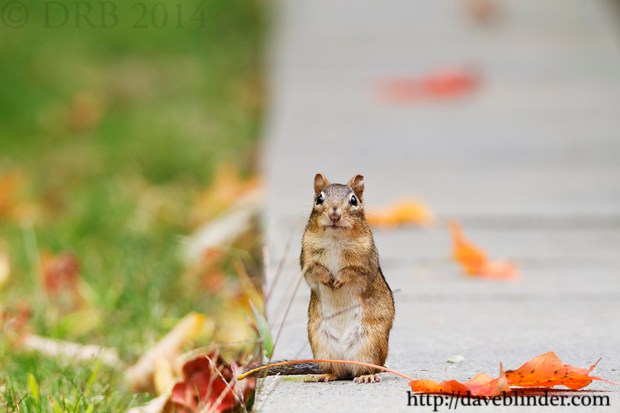
A small brown rodent takes a break from fattening up on acorns to ponder what the heck this human is doing.

1/80 F/8 ISO 400.  Taken with the Tamron SP 150-600mm lens, the Canon EOS 7D, and a Manfrotto tripod with fluid head.

I got lucky that the chipmunk paused just behind a couple of vivid fallen leaves.  To me, they are the icing on the cake and a fortunate happenstance.
New Jersey Landscape Photography: View Through Barn

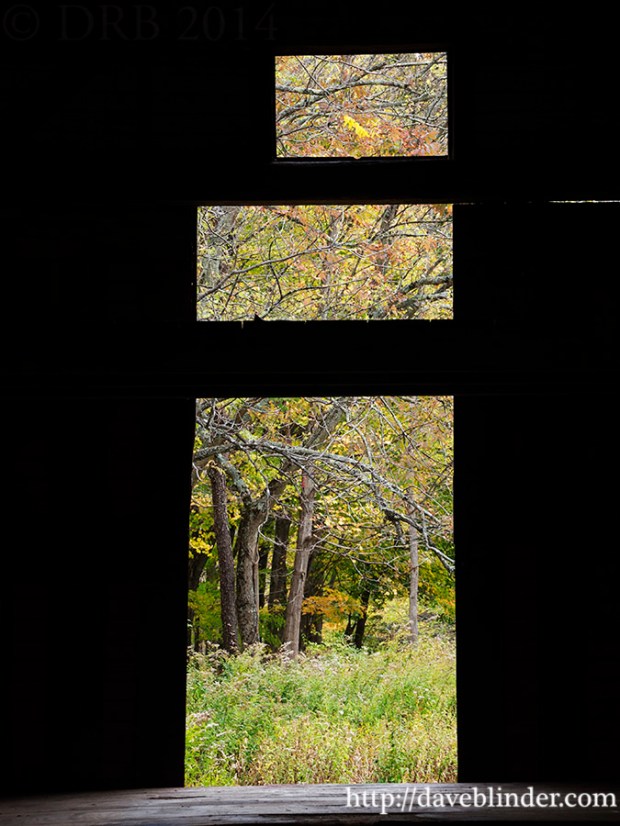
Here is one of my favorite photos I took today on a nature excursion.  The Delaware Water Gap National Recreation Area in NJ contains many historic buildings that are great for photography.  Entrance into the buildings is forbidden, but for this shot I set my tripod just outside of the barn so my lens could peer though.

New Jersey Landscape Photograph

A historic barn divides a view of the woodlands into three sections. Photo taken with the Tamron 14-150mm Di II lens and the Olympus PEN E-PL3 micro four thirds camera.

My favorite part of this photo is the faint splash of light hitting the floorboards in the foreground.

Equipment used: Tamron 14-150mm Di III Lens, polarizing filter, Olympus PEN E-PL3 micro four thirds camera, carbon fiber tripod.  Exposure settings: 1/6 F/11 ISO 200.

New Jersey Bird Photography: Bald Eagle

Here is a recent photo taken less than 15 miles from my home.  While Bald Eagles are certainly not abundant in New Jersey, we do have breeding pairs that can be found in many counties.  Expansive habitats like the Delaware River are prime fishing areas for our national bird, but they can survive off of inland lakes and ponds if the conditions are correct.

Haliaeetus leucocephalus

An adult Eagle captured mid-air, this bird was circling a meadow on a warm Fall day in New Jersey. Photographed with the Tamron SP 150-600mm VC lens and the Canon EOS 7D.

Above photo of a Bald Eagle was taken in Morris County, New Jersey.  Equipment included the Tamron SP 150-600mm VC lens and the Canon EOS 7D.  Exposure settings were: 1/200 F/8 ISO 400 @ 600mm.

Name that bird

We had a fairly heavy overcast afternoon today in New Jersey.  While my typical approach to bird photography is to freeze any action, the increased exposure time lent itself much better to creative motion blurs.  I thought I would have some fun with this one, and allow viewers to guess the species name of the bird in the photo below.  It is a composite image, and both birds are the same species.

bif

Motion blur capture of a bird in flight, this a two image composite. Photographed in New Jersey with the Tamron SP 150-600mm VC lens and the Canon EOS 7D.

Any guesses on what type of bird is flying in my frames?

I will disclose the information after I get a good number of guesses.  Photo taken with the Tamron SP 150-600mm VC lens and the Canon EOS 7D in New Jersey.

DSLR Nature Video: Eastern Phoebe

Here is some recent footage of one of the more common native flycatchers of New Jersey, the Eastern Phoebe.  Like most flycatchers of our area, this little drab bird spends its time gleeming the air and ground for live insects and will often perch on branches just above their food sources.

This footage was shot with the Tamron SP 150-600mm VC lens and the Canon EOS 7D DSLR on a Manfrotto tripod with fluid head.  For best audio and video quality, select 1080p on the YouTube settings.

Macro Photography: Smeared Dagger Moth Caterpillar

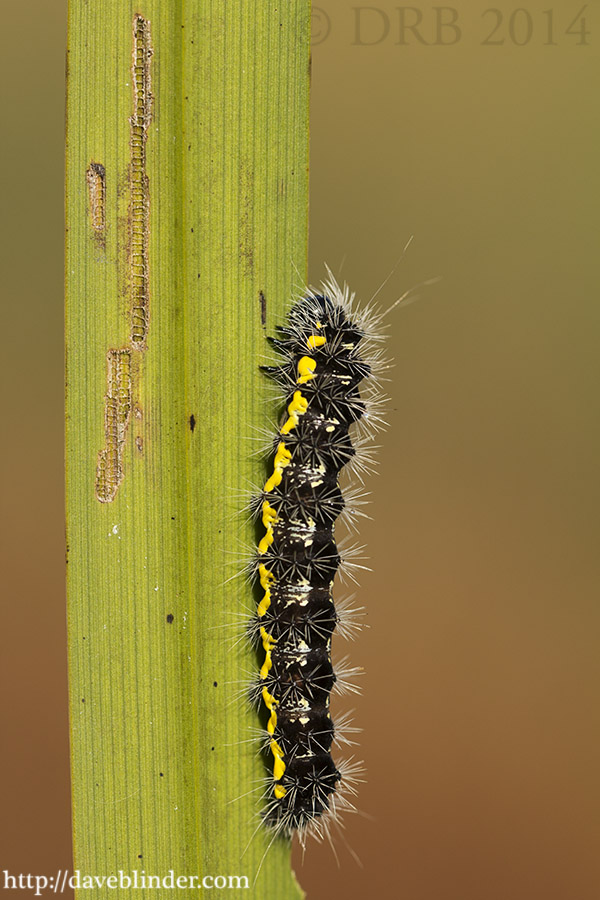
This photo was taken two days in Morris County, New Jersey.  My typical daytime macro setup of the Tamron SP 90mm VC 1:1 lens and Canon EOS 60D was used handheld.  I do like to use a tripod as much as possible, but a paper-thin blade of grass blowing in the wind becomes an even more difficult target from a tripod.

Acronicta oblinita

An isolated view of a caterpillar with a contrasty yellow and black coloration photographed in portrait orientation.

A sharp frame after two or three DOZEN attempts at squaring up to the blade of grass, getting the camera sensor fairly parallel to the caterpillar, getting my composition locked in, and eliminating motion blur within the frame.  If you are going to bother trying to take a snapshot, you might as well take the time to make sure you’ve applied all of your skills and knowledge to the shot.

1/250th F/5.6 ISO 200 in Manual Exposure mode.

Skateboard Photography: Backside castle flip

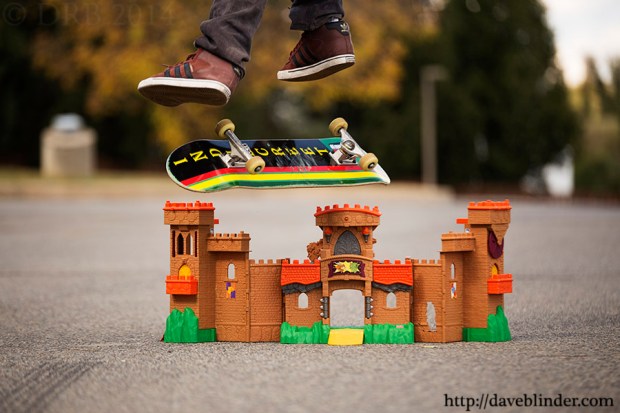
Okay, so the actual name of this trick is a backside kickflip.  Photo taken today in New Jersey, and that is my friend Joe Rajsteter partaking in his favorite hobby as he has done for the past 2 decades.

NJ skate photo

Joe Rajsteter showing he is king of this New Jersey castle by nailing a backside kickflip. Photo taken with the Tamron SP 70-200mm F/2.8 VC lens and the Canon EOS 60D DSLR.

The intermittent clouds and occasional harsh sun made for challenging exposure conditions today, but I think this frame winds up with a “near vintage” color temperature and tonality.  Photo taken with the Tamron SP 70-200mm VC lens and the Canon EOS 6D DSLR.  Exposure settings: 1/1000th F/2.8 ISO 250, 177mm focal length.

Critical Focus in Photography: Spotted Orbweaver

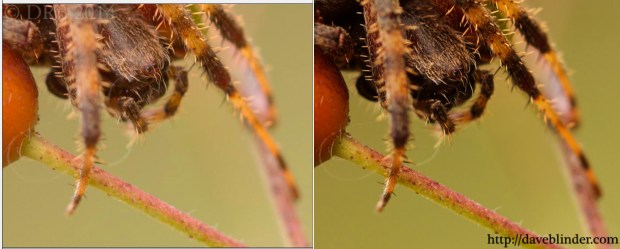
It is a widely accepted concept in people photography and wildlife photography that getting the eyes of the subject sharp will make or break a photo.  One obvious exception being abstract photography.  In can be pretty tough to gauge sharpness on macro critters, and it is not easily achieved in outdoors field photography.  By my estimations, I take at least one dozen shots of each composition while looking through the viewfinder and being thoughtful of my shutter speed to get the photo I am after.

Araneus diadematus

A magnified view to aid in image sharpness checking. RAW preview on left and optimized JPEG on right.

A composite image shows one of the few frames that met my sharpness standard for this capture of an Orbweaver spider.  It is not blurry before processing and it is not blurry after processing.  The main changes are contrast enhancement along with light noise reduction and global sharpening.

New Jersey spider picture

An outdoors spider in New Jersey, photographed handheld with the Tamron SP 90mm VC and the Canon EOS 60D.

Above we see the full view of my macro photo in its native 3:2 aspect ratio with no cropping performed.  Using my 60D and Tamron 90mm VC, I manually exposed with settings of 1/100th F/4.0 ISO 200.

Image Optimization for Wildlife Photography: Common Yellowthroat

I do get occasionally get asked about my post-processing workflow.  I am an advocate of “getting it right in the camera”, and most of my photographs are presented in a straightforward manner so I spend a trivial amount of time in the “digital darkroom”.  When shooting at higher ISO’s (800 and above), I find the need to apply a little extra TLC to photos.

post-processing before and after

The left side is my photo with my default RAW conversion settings applied. The right side is my final optimized image with additional selective noise reduction and sharpening performed for maximum image quality.

The above side by side view shows my typical RAW file with default settings applied (very light noise reduction and sharpening).  On the right I have gently applied more noise reduction on only the background, and additional sharpening on the bird’s face only.  This took me less than 5 minutes to prepare my photo for web and basic print usage.

NJ bird photo

One of our most common Warblers in New Jersey, here is a striking male in his typical habitat. Photographed with the Tamron SP 150-600mm Lens and the Canon EOS 7D.

The photo above is finalized JPEG for online presentation.  Cropping would increase the apparent signal-to-noise ratio of the image, and I did not feel a crop was in order for this shot.

This male Common Yellowthroat (Geothlypis trichas) was photographed at the Troy Meadows Natural Area in New Jersey.  Photography equipment used includes: Tamron SP 150-600mm VC Lens, Canon EOS 7D DSLR, Manfrotto 055x ProB tripod.

Exposure info: 1/160 F/8 ISO 800

Fog on Lakeshore

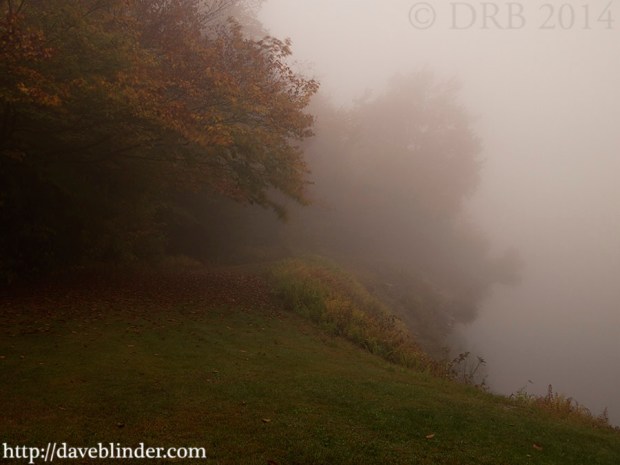
This landscape photograph was taken at 7:16 AM at Ricketts Glen State Park in Pennsylvania.  The composition is framed using several points of alignment to the rule of thirds.  An obscured background tree caused by the dense layer of fog adds the essential element of mystery to the photo.

Fine Art Nature Photography

A few minutes after sunrise, a blanket of fog sets the mood on Lake Jean at Ricketts Glen State Park in Pennsylvania. Photographed with the Tamron 14-150mm Di II and the Olympus PEN E-PL3 compact camera.

Equipment used: Tamron 14-150mm Di III Lens, circular polarizing filter, Olympus PEN E-PL3 micro four thirds camera, and Benro carbon fiber tripod.  Aperture Priority exposure mode resulted in camera settings of: 0.6s F/10 ISO 200.  17mm focal length, RAW image format, 2 second timer.