Name that bird

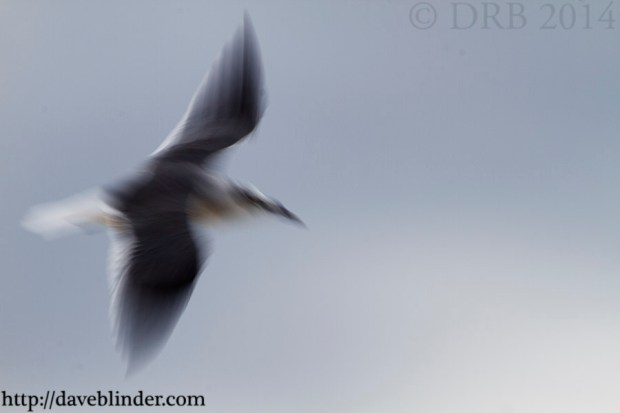
We had a fairly heavy overcast afternoon today in New Jersey.  While my typical approach to bird photography is to freeze any action, the increased exposure time lent itself much better to creative motion blurs.  I thought I would have some fun with this one, and allow viewers to guess the species name of the bird in the photo below.  It is a composite image, and both birds are the same species.

bif

Motion blur capture of a bird in flight, this a two image composite. Photographed in New Jersey with the Tamron SP 150-600mm VC lens and the Canon EOS 7D.

Any guesses on what type of bird is flying in my frames?

I will disclose the information after I get a good number of guesses.  Photo taken with the Tamron SP 150-600mm VC lens and the Canon EOS 7D in New Jersey.

Image Optimization for Wildlife Photography: Common Yellowthroat

I do get occasionally get asked about my post-processing workflow.  I am an advocate of “getting it right in the camera”, and most of my photographs are presented in a straightforward manner so I spend a trivial amount of time in the “digital darkroom”.  When shooting at higher ISO’s (800 and above), I find the need to apply a little extra TLC to photos.

post-processing before and after

The left side is my photo with my default RAW conversion settings applied. The right side is my final optimized image with additional selective noise reduction and sharpening performed for maximum image quality.

The above side by side view shows my typical RAW file with default settings applied (very light noise reduction and sharpening).  On the right I have gently applied more noise reduction on only the background, and additional sharpening on the bird’s face only.  This took me less than 5 minutes to prepare my photo for web and basic print usage.

NJ bird photo

One of our most common Warblers in New Jersey, here is a striking male in his typical habitat. Photographed with the Tamron SP 150-600mm Lens and the Canon EOS 7D.

The photo above is finalized JPEG for online presentation.  Cropping would increase the apparent signal-to-noise ratio of the image, and I did not feel a crop was in order for this shot.

This male Common Yellowthroat (Geothlypis trichas) was photographed at the Troy Meadows Natural Area in New Jersey.  Photography equipment used includes: Tamron SP 150-600mm VC Lens, Canon EOS 7D DSLR, Manfrotto 055x ProB tripod.

Exposure info: 1/160 F/8 ISO 800

Expressing motion in photography: Laughing Gull in flight

Plenty of terms for the type of DSLR photography illustrated in the main image below and to tell you the truth I don’t even know what to call them.  Panning blurs may be the most logical terminology in my opinion.  Anyways, I often forget how much I enjoy looking at this type of capture.  It seems to boil the bird down to its very essence: shapes and colors.

Larus delawarensis

Photo demonstrating intentional use of a slow shutter speed along with panning of a telephoto lens.

Picture taken using a Canon EOS 7D and the Tamron SP 150-600mm VC telephoto lens.  Tripod lens collar is mounted to Manfrotto 055xProB tripod and Manfrotto junior fluid head.  Camera settings: focal length at 600mm, Manually set shutter at 1/30th, aperture at F/14, ISO 100, Camera RAW, Auto White Balance, VC On, Servo Focus Mode, High Speed Motor Drive.  Photography location: Ocean County, New Jersey.  Atlantic Ocean that is…

This type of photo can sometimes be performed in Aperture Priority mode by using a low ISO and large Aperture number to slow down the shutter.  The shutter speeds that usually work best for me are between 1/13th and 1/50th.  Your mileage may vary.  My goal when preparing for this kind of shot is to get a good amount of definition on the wildlife while emphasizing some motion (in this case the wing beats).  I also want a nice bright exposure that will retain a lot of details in the highlights but still have my histogram as far to the right as possible for maximum detail.  Compositionally speaking, I may be looking to place the bird prominently in the frame without cutting off any appendages or I may want try to include some scenery like showing the bird flying across the water’s surface.  There is a great deal of trial and error in this style of photography.  Patience, persistence, and studying other photog’s successful photos will go a long. way.

Bird Photography in Cape May – American Goldfinch

I was recently down in Cape May to do some nature photography.  Since CM is the undisputed birding capital of New Jersey, it only makes sense to take a long telephoto lens along like the Tamron SP 150-600mm VC.  Below is one of my favorite captures from this excursion.
Bird Photography

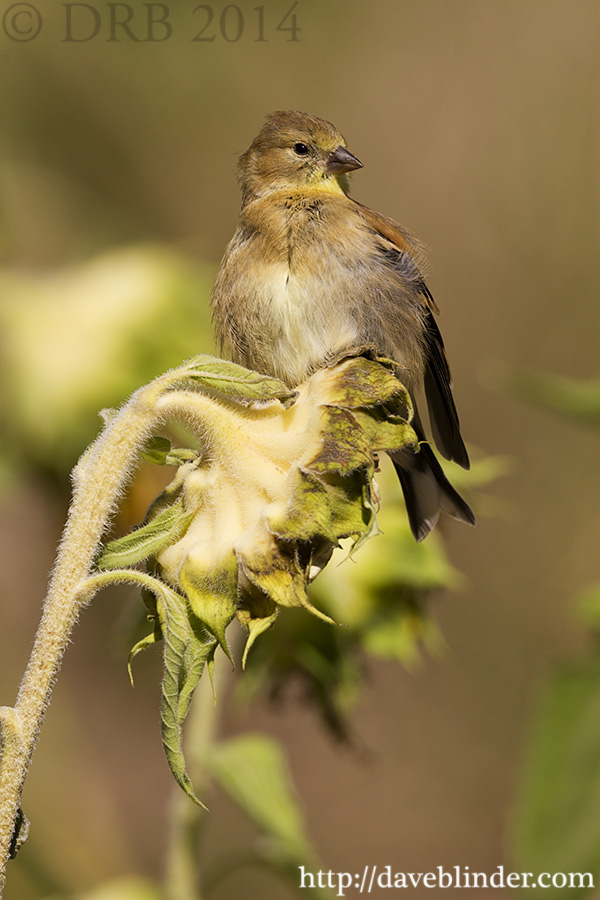
A closeup view of a female American Goldfinch at rest on a Sunflower in Cape May, New Jersey.

Shutter speed: 1/500 Aperture: F/9.0 ISO: 200 in Aperture Priority Mode +2/3 Exposure Compensation.  The Focal Length is 500mm.  Other settings: VC On, Manfrotto tripod, Spot Metering, Manual White Balance on my Canon EOS 7D

There was a flock of at least 1 or 2 dozen Goldfinches busily feeding in this Sunflower Patch, but upon my approach they retreated to the trees which is the expected response from most songbirds.  Most wildlife is genetically imprinted to flee from humans, as they were historically a food source in the days when hunting was our only means of sustenance.  Experience and literature will tell us that individual bird species have their own expected “flush range”.  Meaning different birds will typically fly away faster than others.  In my personal experience, a very slow but direct approach on a feeding Goldfinch may occasionally get you as close as you want to get.

This particular female American Goldfinch did not fly when the rest of her flock retreated, instead it appeared to me that this bird was mostly basking in the warmth of the sunlight.  She was splitting her time between preening (tending to her feathers) and plucking seeds from the Sunflower head below her.  After years of bird observation, I could tell that this bird was relaxed because it showed no intention of flying away and also lacked the nervous head movements and body twitching that comes before the songbird flushes (flying away).  I got my tripod to the desired photographic height and slowly worked my way forward, one large deliberate by quiet footstep at a time.  The photo featured on this page is not cropped whatsoever and I would not have wanted to shoot it any tighter.  After I was done making my captures I exited the scene in the same slow and deliberate manner to not cause undue stress to the passerine (songbird).