Skateboard Photography Session with Dave Smith

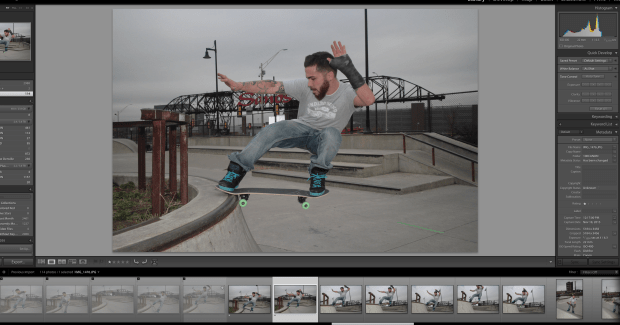
I had a great day out shooting today at the Bethlehem Skate Plaza with accomplished and enthusiastic skateboarder Dave Smith.

Over the course of 3 hours we were able to capture a great variety of tricks and angles for Dave to provide to his skateboard sponsors and for his personal usage on social media.

Here’s a quick preview of the digital darkroom, and I’m looking forward to sharing the final photos in the very near future.


Screen Shot 2015-11-18 at 4.33.45 PM.png

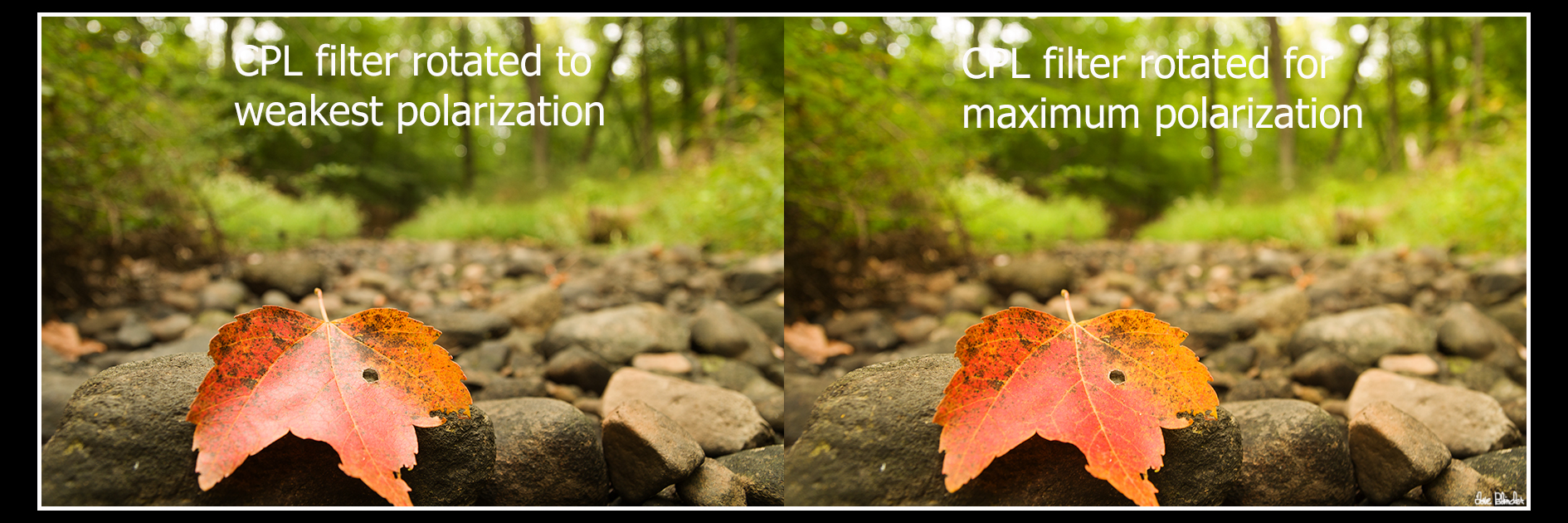
The effects of a CPL (Circular Polarizing Filter) for landscape photography.

The effects of a CPL (Circular Polarizing Filter) for landscape photography.

CPL filter test

Circular Polarizing Filter before and after comparison.

For most landscape photographers, leaving the house without a CPL would be like forgetting your wallet on your nightstand.  CPLs increase saturation, help us see directly through clear water, and also cut through glares on foliage.

What don’t CPL filters do?  They don’t compensate for poor composition or shooting into extreme shadows and highlights.  CPLs work best on wide angle (slim mount filter required) and standard zoom lenses.  CPLs may degrade sharpness on telephoto or super zoom lenses.  CPLs also slow down shutter speeds slightly, by blocking 1 or 2 stops of light.

Specs for sample photo – Tamron SP 17-50mm + Canon​ EOS M2.  17mm, F/4.5, ISO 100, Aperture Priority Mode +2/3 stops of light.  Photo taken in Morris County, New Jersey.

Maximizing dynamic range in landscape photography

NJ landscape photography

An abandoned pasture slowly returns to its natural state under an ominous sky in New Jersey.

My goal in nature photography is generally to have my photos look very realistic, yet also portray a flattering impression of whatever laid in front of myself and my tripod.  While out shooting yesterday, I was fortunate to have overcast lighting and also some dramatic clouds.  More or less the ideal conditions for photographing scenery.  The histogram on my DSLR was showing that I was losing a smidgeon of highlight data within my first exposures, so the easy solution was to bracket exposures and blend in post-processing.

For both photos below, I initially shot different exposures, bracketed 2/3 of a stop over and under my baseline capture.  Within Photoshop I used the “HDR Pro” option and selected the “Highlight Compression” option to maximize details in my highlight regions.  I then used a Levels Adjustment to add some pop back into my shots.

NJ landscape photography

The open doors of an old horse stable evoke thoughts of a once-thriving farming economy in New Jersey.

Unsure how to bracket your photos?  Your camera’s manual most likely contains that info, otherwise a quick Google search for bracket photography exposures will lead the way.  Don’t know how to blend exposures or execute HDR?  Ask Google, there are many great tutorials.  Technical and software skills such as these are requirements of modern digital photography.  Learning to look up tutorials on your own and interpret them is an even more valuable skill.  The info is out there, if you seek it.

The Creative Vision Hoax in Nature Photography

“The Creative Vision Hoax in Nature Photography”
New Jersey Fine Art Photography

A small aperture and dark exposure helps frame the morning sun striking the Jersey Shore.

I just got done flipping through another recent article in a photography magazine (name omitted to protect the guilty).  In my estimation 80%-90% of photography periodicals, videos, and websites are rehashing the same post-processing principles that have been discussed ad nauseam since the early 2000’s.  In the meantime, they are beating the dead horse on composition and exposure techniques that have been documented and discussed for at least 50 years.

My pet peeve is writings on the topic of “creative vision”.  When shooters and authors mention creative vision, what they generally mean is taking the liberty to pull as many sliders in Lightroom as possible.  Making the image looking wholly unnatural, yet justifying that their “eyes saw it that way”.  I concur that there are no rules to art or photography, but to claim that the sky above the Earth is regularly the color of pure cyan or that the human eye views clouds with intense tonal gradations is nonsense.  Modern age photographers should absolutely use all technology available to them, but they should do so with full disclosure.

Instead of stating my “creative vision” saw the scene this way, why not phrase it more accurately?

“I thought I could spice it up by adding intense contrast using software plug-ins.”

“The straight out of camera shot would receive little attention so I tried to improve it.”

“I use heavy post-processing on my photos to get more views on social media.”

The integrity of the field of photography is better preserved when we are honest about our techniques.  “Creative Vision” “Marketing Vision” and “Post Processing Tools” are different concepts.  You can fool some of the people some of the time…

Words and photo by Dave Blinder.

New Jersey Photography Exhibit

My new photo exhibit, “Landscapes of New Jersey” went live today at Cafe Metro​ on Diamond Spring Road in Denville.

New Jersey Photography Exhibit

2 of my New Jersey landscape photos on display at Cafe Metro in Denville Township. 20% of all sales go directly to the Conserve Wildlife Foundation of New Jersey.

NJ Photo Exhibit and Sale

1of my New Jersey landscape photos on display at Cafe Metro in Denville Township. 20% of all sales go directly to the Conserve Wildlife Foundation of New Jersey.

20% of all proceeds will go directly to the Conserve Wildlife Foundation of NJ​

I will be arranging a meet and greet at Cafe Metro in the near future.

Related links:

https://www.facebook.com/CafeMetroDenvilleNJ

https://www.facebook.com/conservewildlife

https://facebook.com/daveblinderphotography

The Best Weather for Nature Photography?

My favorite nature photos, especially landscapes are often taken in the most brutal weather conditions.  Often in snow, rain, or wind that makes being outdoors very uncomfortable.  On the contrary, I don’t find many of my “blue sky” shots to have much of a mood to them.  Why the correlation between extreme weather and dramatic photos?  I’m not entirely sure, but I think that the sunlight is often much softer during bad weather spells.  Also, precipitation and moisture in the air create a lot of mystery and drama.  Perhaps a great deal of effective nature photography lives in the surreal or sublime realms?  On the other hand, embracing and emphasizing the mundane is an effective technique too, especially for street photography.

As my photography years go on, I’ve come to embrace adverse weather conditions more and more.

What weather conditions have created your most dramatic photos?

Wooded Road in Winter

Infrared photo taken in the early stages of a snow storm in Chester, New Jersey. I had finished a quick walk at some local parks, but glanced down a residential road and couldn’t resist shooting a vanishing point in the snow.

Electric Brook Falls in Winter

Photo taken shortly after a snow storm. The walk down to this vantage point was treacherous to say the least. I did not enjoy the bitter cold or the fright from extremely icy rocks. I do enjoy looking at the photo from home now, though.

New Jersey Nature Photography

A very gloomy morning on the Atlantic Ocean. Photo taken in Ocean City, New Jersey. The wind was strong and actually a big unnerving. Even with a tripod-mounted camera, I will keep the camera’s strap around my neck to avoid accidents in this type of weather.

And here is a blue sky photo that I like:

New Jersey Nature Photography

A blue sky above the New Jersey Pinelands is dotted with Cumulus clouds, adding the illusion of depth to some two-dimensional pixels.

New Jersey Wildlife Videography

I recently filmed and edited 3 new short wildlife DSLR videos… in high definition of course.  The opportunities for getting high quality and up close footage of wild animals are few and far between.  More often then not, the view of a wild bird or mammal is obscured by a foreground element like a branch or shrub.  Also, even with a long lens like a 600mm zoom getting good proximity on the subject can be a challenge.  Anyways, on to my newest videos… all of the video editing was performed in Adobe Premiere Pro and I laid down the audio tracks in Audacity.  Filming performed via Canon 60D DSLR and Tamron lenses.

Harbor Seal:

Harbor Seal filmed with Tamron 16-300mm VC PZD lens + Canon 60D

Northern Cardinal

Cardinal filmed with Tamron SP 150-600mm VC lens + Canon 60D

Brant (geese)

Brant filmed with Tamron SP 150-600mm VC lens + Canon 60D

For video licensing info, freelance video editing, or for further info on my techniques just ask.

Leica Lifestyle Photography – Ice Fishing

I am continuing my rental evaluation of the Leica X Typ 113 compact mirrorless digital camera.  I had an opportunity to take some snapshots of some local outdoorsmen today, and hopefully I’ve captured some of the spirit of these friendly guys.

NJ Leica Photograhy

The tradition of #icefishing brings together some old friends in New Jersey. Handheld #photo with the #Leica X Typ 113.

NJ Leica Photograhy

Hauling in a #Pickerel on a sunny February day in #NewJersey . Handheld #photo with the #Leica X Typ 113.

NJ Leica Photograhy

A couple of locals taking in some sun and conversation while ice fishing in #NewJersey . Handheld #photo with the #Leica X Typ 113.

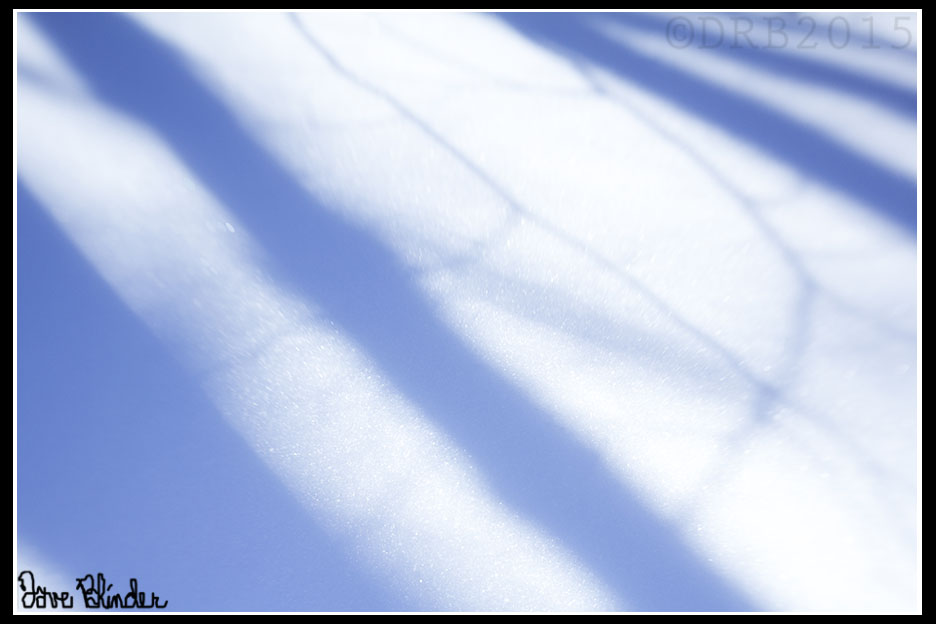
New Jersey Nature Photography: Tree Shadows on Snow

“Tree Shadows on Snow”, New Jersey nature photography from Morris County.

“The art or process of producing images by the action of radiant energy and especially light on a sensitive surface.”  – Merriam-Webster dictionary.

Elusive wildlife and scenic vistas can make outstanding photos, I like to shoot them often.  Don’t forget to capture the small things either.

NJ snow photo

On a cold winter day, the long shadows of bare trees stretch across and empty canvas of snow. #Nature #photography #minimalism

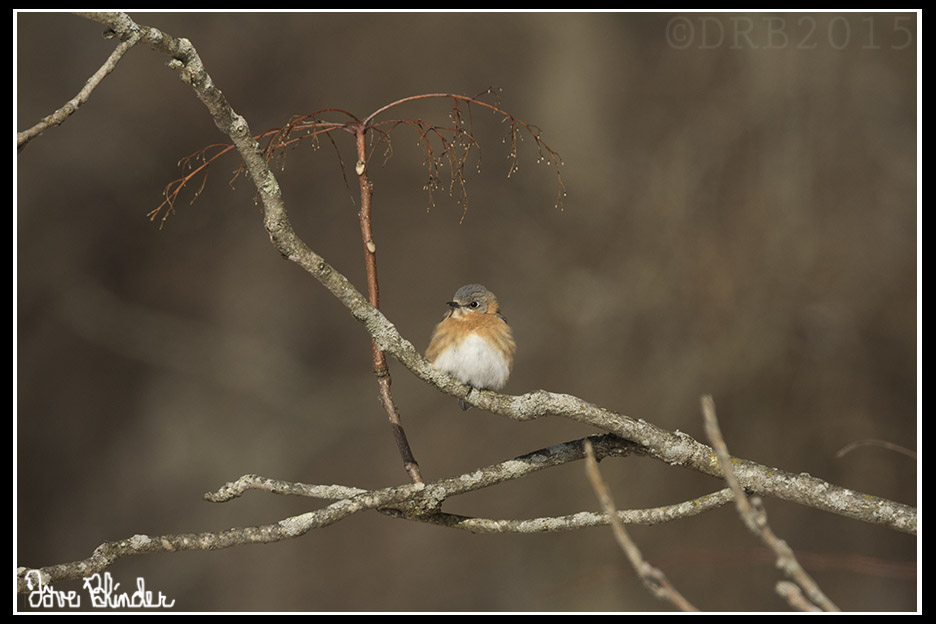
New Jersey Bird Photography: Eastern Bluebird

Eastern Bluebird, New Jersey wildlife photography.

This female Bluebird did not tolerate close photos, but luckily I paused upon approach to grab what I call “safety shots”.  In the world of birdwatchers, we become familiar with the terms “flushing” and “flush range”.  It infers a wildlife species’ or individual’s quantifiable tolerance for close human approach.

My “safety shot” shown here has both an uncluttered foreground and background while possessing a viable illumination.  Hence, a keeper for me.

NJ birding

A female Eastern Bluebird sits aloft a horizontal branch on the periphery of the forest. #NewJersey bird photography taken with #Tamron SP 150-600mm VC lens and #Canon EOS 60D.

Tamron Lenses​ SP 150-600mm VC + Canon 60D

https://facebook.com/daveblinderphotography