Setting up Foliage Closeup Photos

I’ve been trying to compose more isolating leaf and foliage macros lately, and there’s certainly plenty of challenges involved in that. One of the most important aspects is the physical condition that the leaf or leaves are in. For the majority of photographs, I believe finding the nearest thing to an immaculate specimen is optimal. Although, depending on the mood of the image, perhaps you are seeking the exact opposite.

Foliage closeup photo

Fern and Rock

The setting for the leaf/leaves is of great importance as well. I experiment with contrasting surfaces and complimentary surfaces just to see “what works”. The texture of the background surface will also play a large role in the feel of the image.

In this particular shot, as with many of my still lifes, I opted to have the plant at a diagonal, as this helps break up an otherwise static and linear image. I’ve also found that a polarizing filter may be essential in these situations as reflectance from leaves can be very distracting in the final image. Lighting conditions? I’ve found flat overcast and shadowless lighting to be pretty good for these kinds of shots.

Right Place, Right Time

Sometimes it just pays to be lucky in photography, and that’s pretty much how I came across this wildlife photo opportunity. Anticipating possible action, being prepared, and visualizing how to maximize the opportunity are also very helpful.

Salamander eating

Red Eft and Earthworm

I like to do my photography rounds with two camera bodies ready to shoot and two distinctly different focal lengths. Generally, I will have either a macro lens or a wide angle lens on one DSLR and a longer telephoto lens (400mm) mounted on the other camera. Currently, no all-in-one zoom or all-in-one camera can match the image quality attainable using specialized lenses as standardized charts and personal experience have taught me.

How else can you be prepared? Remove the lens caps in advance, leave your DSLR switched on (they go into convenient standby mode anyways), and have the camera settings attuned to the current ambient lighting situation as best as possible. A formatted memory card and extra batteries are a must for me as well.

Maximizing the opportunity:
Let’s talk about this particular shot. I did not immediately realize there was a tiny amphibian chowing down in front of me as I don’t have superhuman vision, but once I did I knew that I wanted to get in as close possible to emphasize the action, to allow my macro flash setup to illuminate the key elements, and to eliminate the need to crop my final photo and waste valuable megapixels of the image. Cropping reduces the maximum print size of an image, and also emphasizes imperfections like noise (film grain).

Luck?  Well you’re one your own with that one.

My Personal View on Post-Processing

I read a lot about “must have” post-processing programs and plug-ins to “get the most out of photography”. I think the trends like adding background textures, post-processing blurs, and over-the-top HDR programs will eventually go the way of the Dodo.

Do you think Ansel Adams would have benefited from importing someone else’s floral patterns behind his powerful mountain images with often ominous storm clouds? Probably not. Did he go beyond basic post-processing? Not really (mostly what I consider rudimentary contrast enhancements). Does his photography have some of the greatest longevity we’ve yet to see? Of course!

Bird photo

Ruby-crowned Kinglet

If I don’t see semblance of a compelling image through my viewfinder or in the Camera Raw preview, I simply move on, and try to compose better next time I shoot.

Just my two cents.

Using a Neutral Density Filter to Enhance Motion

This photo was taken on an overcast morning so a slow-ish shutter speed was inevitable. However, I really wanted to emphasize the motion in the flow of the water, so I mounted my 3-stop neutral density filter which allowed for a shutter speed of 8 seconds at F/16 ISO 100. The lens used was my Tamron 18-270mm VC, at 18mm.

New Jersey Scenery Photo

Rockaway River and Footbridge

Long exposures like 8 seconds are a matter of taste, but I love the painterly effect it can give. I find that the majority of ND filters on amazon are decent quality, and I usually don’t spend much more than $20 on mine.

On Snake photography…

I find it’s hard to take a great snake photo. One of the main issues is that there elongated body shape is not naturally conducive to the aspect ratio of a photograph, unless you are shooting panoramas. My personal opinion is that going in close for just a headshot of wildlife often yields great detail, but may also remove artistic longevity from the final image. Alternatively, it is very difficult to compose a compelling wideangle photograph of most wildlife for a variety of reasons. One being that their habitat is often simply too cluttered to create a compelling frame. Another reason is obviously that most wildlife is generally on the move, so you aren’t typically going to have the chance to to compose something grandiose.

Snake

Black Ratsnake; juvenile

I am fairly satisfied with this photo, because the snake coiled in a way (striking position) that allowed me to get close enough to eliminate a largely distracting background. At the same time, I was not only lucky enough to get a bit of its body in the frame, but I was also able to shoot a frame where the snake’s head was in profile. This was also difficult as this wary and aggravated snake really did not trust me to take its eyes off of me for very long.

Product Photography

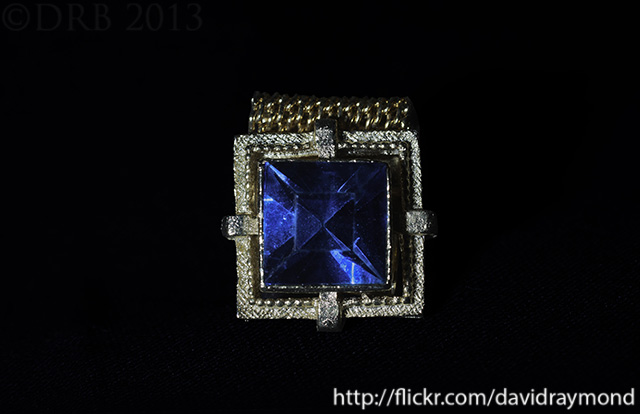
Occasionally I dabble in home product photography for practice and portfolio’s sake. The black background here is a black muslin that I ordered a while ago. Unfortunately, the flash did reveal a decent amount of texture within that black, however a post-processing adjustment of increasing the black levels made for a pretty easy fix.

Jewelry Photography

Quack!

As winter quickly approaches, my mind always drifts towards the migrant ducks that congregate near Long Beach Island in New Jersey. Some of the challenges include isolating a single bird amongst their groupings, trying to predict where the diving ducks are actually going surface, and dealing with the very slippery jetty you have to walk out on.

Harlequin Duck

Quack!

I like this intimate view of the Harlequin Drake because you get a nice view of his intricate patterns, and the very comedic value of a cute duck with his mouth agape!

One of my favorite photos from 2013

You wouldn’t believe the terrible condition this group of flowers was in.  In fact, this particular petal was one of the few that wasn’t completely wilted.  The vast majority of petals had already fallen to the ground as this photo was taken in early October and most blooming plants were WAY past their prime.  I was quite surprised to stumble upon this small cluster of vivid flowers in a local park, but the overall scene was not pretty.

Positioning the tripod for a close photo was difficult.  On a few early attempts, one of the tripod’s feet shook the plant during my setup process, causing most of the water droplets to fall off of the original petal I was trying to photograph.  On a different attempt, I touched a petal to prevent two from intersecting…. this smudged the droplets and completely ruined the picture.  I was also working against time, as bright morning sun is prone to burning dew and droplets off quickly.

It’s funny the small, yet important lessons you learn while photographing subjects like these.  In this case: Handle with care, Be very mindful during tripod setup, and remember that many photographic opportunities are fleeting.

Water droplets on Flower Petal

Water droplets on Flower Petal

Frosty Opportunities

I generally dread the onset of cold weather, because overall photographic opportunities seem to dwindle in my mind.  However, I have recently delved further and further into the realm of macro photography and minimalistic foliage shots, a maturation of sorts.

This year I plan on embracing the cold a bit more, because with subject matter like frost, snow flakes, and patterned ice the possibilities are really limitless.

Frost Detail on Leaf

The above photograph was taken with my nifty new Tamron 90mm VC macro lens mounted on “old faithful”, my 18mp T2i.  I set the center column of my Manfrotto 190xProB horizontal for precision low-level shooting for this photo.